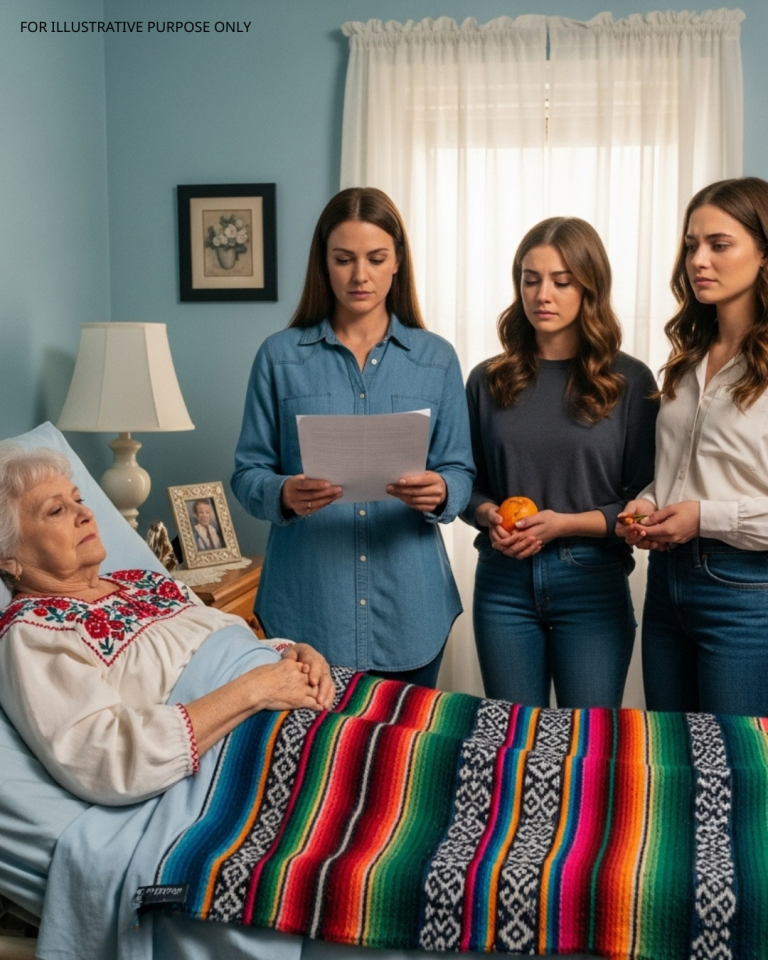
The Letter Beneath the Bed
Chapter 1: The Day I Joined the Carpenters
My name is Laura Campbell, and I married into the Carpenter family when I was twenty-five. I met my husband, Adam, while working as a receptionist at a small physical therapy clinic in Asheville, North Carolina. He was the youngest of three siblings—quiet, gentle, and steady in a way that made me feel safe.
After our wedding, we moved into his childhood home, a weathered Craftsman-style house at the edge of town, nestled between tall pines and winding mountain roads. Living there meant living with his mother, Mrs. Margaret Carpenter, whose health had begun to decline after years of battling a chronic degenerative condition.
The doctors said she needed constant care.
I didn’t hesitate.
I left my job at the clinic and stepped into a role I hadn’t expected to fill so early in life: full-time caregiver to the woman who had raised my husband.
But what I thought would be temporary became eight long years.
Chapter 2: Eight Years in the Quiet Corners of the House
Those eight years shaped me in ways I never imagined.
Every morning began before sunrise. I warmed her oatmeal, helped her sit up, brushed her thinning silver hair, adjusted her pillows, checked her medications. I lifted her gently, turned her often to prevent pressure wounds, and massaged her legs when the pain kept her awake at night.
The house was quiet most evenings—just the hum of the refrigerator and the steady tick of the hallway clock. Outside, the Carolina wind rustled through the pines, sometimes carrying the distant call of an owl.
Her daughters, Angela and Bethany, lived far away, wrapped in busy lives and careers. They visited once or twice a year, always praising my patience but never offering more than a brief afternoon of company.
People often said, “You’re doing the right thing,” but they didn’t see the exhaustion behind my smile. I wasn’t looking for praise. I just wanted meaning—something to make the sacrifice feel like it mattered.
Deep down, I hoped that Mrs. Carpenter, raised in a traditional Southern family, would recognize the care I gave her. Maybe one day she might leave us something small—a piece of land behind the house Adam dreamed of turning into a workshop, or a modest savings account to help us start something of our own.
Chapter 3: The Day the House Went Quiet
One chilled February morning, with winter sunlight falling softly through the blinds, Mrs. Carpenter took her final breath.
I was holding her hand.
She slipped away peacefully, her face relaxed in a way I hadn’t seen in years.
Her daughters arrived quickly after the news spread. Angela cried loudly, hugging neighbors and telling stories of childhood devotion. Bethany performed grief like a script, comforting people she barely knew.
I stayed in the corner, quiet, wearing a simple black dress. I didn’t need to be seen. I just needed space to breathe.

Chapter 4: The Will That Closed the Door
Two weeks later, the family gathered in the living room for the reading of the will. The air felt heavy—thick with tension and unspoken expectations.
The attorney, Mr. Dalton, cleared his throat and read:
“All properties, bank accounts, and assets belonging to Margaret Elaine Carpenter shall be divided equally among her three children: Angela, Bethany, and Adam.”
He continued reading, but my chest tightened.
Then he closed the folder.
“And that concludes the will. Mrs. Carpenter’s daughter-in-law, Laura Campbell, is not listed as a beneficiary, though she may retain the right to live in the home while remaining married to Adam.”
It wasn’t the absence of money that hurt.
It was the feeling of being invisible.
Eight years of caring, sacrificing, and giving everything I had—reduced to a footnote.
Adam squeezed my hand.
“We did what was right, Laura. That’s what matters.”
His voice soothed me, but the ache lingered.
Chapter 5: Six Weeks Later
Six weeks later, when the house had grown quieter and the first sharp edge of grief had softened, I decided it was time to clean Margaret’s room.
It wasn’t a ritual or a tradition—just the moment when my heart felt steady enough to open her door without breaking.
I washed her quilts, packed away her scarves, dusted the nightstand, sorted her books, and wiped down the wooden headboard she had leaned against for years. The room still carried the faint scent of lavender.
When I lifted the woven rug beside her bed, I noticed a slight bulge beneath the mattress.
At first, I assumed it was a misplaced heating pad or an old cushion. But something made me pause.
I slid my hand beneath the mattress and felt thick paper.
I pulled out a small cream-colored envelope, sealed and worn with age. My name was written across the front in her fragile handwriting:
“For Laura — My Daughter in Heart.”
My knees weakened. I sat on the hardwood floor, trembling, staring at the way she had written my name.
Then I opened it.
Chapter 6: Her Voice on the Page
Inside were several handwritten pages, her delicate script wavering but clear.
My dearest Laura,
You carried more than anyone ever knew. You gave me dignity when I could not give it to myself. You lifted me, comforted me, and stayed by my side through every sunrise and every long night.
I know my daughters, and I know their pride. Leaving my estate to you would have caused conflict that would follow you for years. I wanted peace for you, not struggle.
But I also wanted you to know I saw everything. I saw your patience. I saw your kindness. I saw your sacrifice.
That is why the gift meant for you is not in the will. It is hidden where only someone who loved me enough to clean my room with care would find it.
Attached to the letter was a small copper key tied with twine, along with another note:
“The cedar chest — under the bed.”
I pulled out the old cedar chest I had dusted many times. Its latch was stiff, but the key fit perfectly.
When it clicked open, the lid creaked back, releasing the familiar scent of cedar.
Inside, wrapped in a neatly folded blue cloth, were documents:
• a property deed for a quiet piece of land near the foothills outside town,
• a savings account book with my name on it, holding far more than I imagined,
• and several personal notes she had kept over the years.
At the very bottom lay a final message:
“This is yours because you earned it in the way that matters. You were my peace in my hardest years. Do not think I ever overlooked you.”
Tears blurred my vision. I held the note to my chest and cried—deep, raw, shaking sobs that echoed quietly through the room.

Chapter 7: The Blessing I Didn’t Know I Had
I didn’t tell Angela or Bethany. Not because I wanted to hide it, but because the truth felt private—something meant only for Margaret and me.
That night, I lit a small candle on her dresser, placed the letter and key beside it, and whispered:
“I’m sorry I doubted you.”
I imagined her warm smile, the one she gave when she felt strong enough to speak.
The resentment inside me dissolved. The anger faded. The ache softened.
The things her daughters inherited looked important.
But I had inherited something deeper.
Her trust.
Her gratitude.
Her love.
Chapter 8: What Stays With Me
Every morning, I step onto the porch with my coffee and breathe in the mountain air. The pine trees sway gently, like they’re greeting me.
Sometimes, in the soft wind, I think I hear her voice:
“Go in peace, sweetheart. You have my blessing.”
And every time, I answer quietly in my heart:
“Thank you, Mom.”