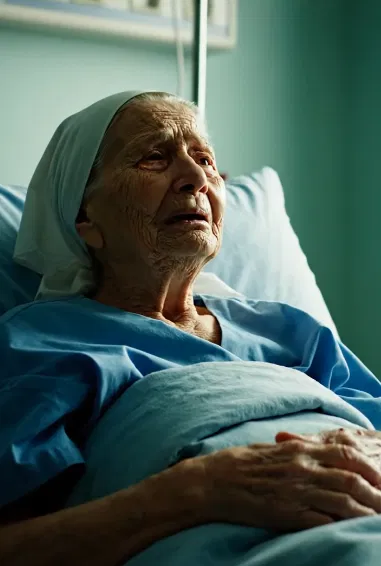
An elderly woman lay alone in the hospital, and no one came to visit her: her only son was just waiting for the moment when the apartment would finally be his 😢😨
I’ve worked in a hospital for many years, and during that time I’ve seen a lot of pain, injustice, and human cruelty. But that last incident forever changed my attitude toward people.
Our 80-year-old grandmother lay with us for almost a month—quiet, careful, grateful for every word, every glass of water. And all that time, no one visited her. Not a single call, not a single visitor. Only we—the nurses and doctors—were there, and during that time, she managed to open up to us.
She told us she had a son and daughter-in-law. When she spoke of them, her voice trembled—not from anger, but from pain. They didn’t come, didn’t inquire about her condition, didn’t even ask how she could help.
Her son called only to find out one thing: was she still alive? He needed her apartment—and that was all.
Every evening, Grandma would stare out the window, as if waiting for someone. Sometimes she thought we weren’t watching and would quietly cry.
I went to see her several times a night, just to talk, so she wouldn’t feel so alone. But the poor woman’s heart—tired of pain and waiting—one day gave out.
That night, only the head doctor and I were with her. Grandma sighed quietly, tried to say something, and then said in a weak whisper:
“And my son… hasn’t he arrived yet?”
Those were her last words. A minute later, she died.
The next day, we called our son to tell him the bad news. Seeing his reaction, I felt worse than I had that night.
“Great,” my son said indifferently. “I’ll pick up her things in the morning.”
But the next morning, when my son arrived, a surprise awaited him, after which he deeply regretted treating his mother so badly. 😢😨
When he arrived, a surprise indeed awaited him. We handed him an envelope with a copy of his mother’s will.
The grandmother had drawn up the paperwork in advance and given her apartment to sick children from a neighboring department, so that the money would go toward the treatment of those who had no one.
The son turned pale.
“You’re lying! It’s a fake! You forced her! I’ll sue you!”
The head doctor calmly placed the paper in front of him:
“No. She decided so herself. She could have left the apartment to you. You just had to come at least once and ask how she was. At least once.”
My son stood, unsure what to do with his hands. And for the first time, emotion appeared on his face—not pain, not grief, but a belated, useless regret. But his grandmother never waited for him.